 Skip-the-line available
 The Best Time to Visit Château de Fontainebleau
A guide to seasons, crowds, the best time of day to arrive and the all-important Tuesday closure at France's eight-century royal palace.
Fontainebleau rewards a little planning, because it is two experiences in one — a richly decorated palace on an open-date ticket and a vast free garden and forest open daily — and each is best at a different moment. The open-date ticket means you pick your visit date and arrive whenever you like during opening hours, so the only real questions are which season suits you, which time of day keeps the apartments calm, and how to avoid the one thing that catches visitors out: the Tuesday closure. This guide breaks down the calendar, the daily rhythm of the rooms, the seasons in the gardens and forest, and the practical detail that makes the visit smooth.
Season by Season at Fontainebleau
Spring (March to May) is one of the best windows: the gardens wake up, the Grand Parterre greens, daylight lengthens, and visitor numbers are rising but still manageable, especially on weekdays. Summer (June to August) brings the warmest weather and the heaviest crowds, with the apartments busiest through the middle of the day; June is the most rewarding of the three for long daylight and gardens in full display, while July and August are best handled with an early-morning slot. The palace keeps its longer April-to-September hours in this period, open 09:30–18:00 with last entry at 17:15.
Autumn (September to November) is a connoisseur's season: mild weather, thinning crowds from mid-September, and autumn colour spreading through the Grand Parterre and the surrounding forest. Winter (December to February) is the quietest of all, with the shorter October-to-March hours (09:30–17:00, last entry 16:15) and the chance of the palace and carp pond in crisp, low light. In every season the gardens and park stay free and open daily, so you can enjoy the grounds even when you have not planned a paid interior visit — and even on the closed days of the week.
The Daily Rhythm and the Best Time to Arrive
Because the Fontainebleau ticket is open-date, you are free to arrive whenever suits you during opening hours — and the time of day you choose makes a real difference to the experience. The calmest visit is to arrive early, soon after the 09:30 opening, before the mid-morning and lunchtime peak when groups and Paris day-trippers converge; the Gallery of Francis I and the Napoleon rooms are far better with space to look. Late afternoon, as the morning groups depart, can also be quiet — just mind the last-entry times (16:15 in winter, 17:15 in summer) so you have enough time inside.
Weekends and French school-holiday weeks draw the largest numbers, so a weekday outside the holidays is the calmest choice. Above all, plan around the closures: Fontainebleau is shut every Tuesday and on 1 January, 1 May and 25 December. A closed Tuesday is the single most common trip-up, because some visitors assume a major palace opens daily. Pick a non-Tuesday, arrive early, and you will have one of the great palaces of France at something close to its best.
Gardens, Park and the Outdoor Seasons
The grounds follow their own seasonal rhythm and are free all year. The Grand Parterre — among the largest formal parterres in Europe — reads as crisp geometry in any season but is greenest from May to September; the English garden, the Diana garden and the long carp pond are at their most photogenic in still morning light, when the palace's façades reflect in the water. Spring and early summer are the gardens' strongest months; autumn shifts the colour to the surrounding forest rather than to the formal beds themselves.
Because the gardens and the Forest of Fontainebleau are open daily and cost nothing, they make the visit flexible: you can wander the parterre and the carp pond before or after your interior visit, or come on a closed day purely for the grounds. The forest, famous for its sandstone boulders and beloved of walkers and climbers, is at its best in dry weather from spring through autumn, with mild light among the rocks in early morning and late afternoon. For a full day, pair an early palace slot with an afternoon in the forest.
Light, Photography and the Cour des Adieux
The signature exterior photograph of Fontainebleau is the curved double horseshoe staircase rising over the broad Cour des Adieux, with the long façade and steep slate roofs behind. It is at its best in the warm, low light of early morning or the golden hour before close, when the stone catches the sun and the forecourt is quieter; midday light flattens it and the courtyard is busier. The carp pond and the Grand Parterre are the other great exterior subjects, mirror-still in calm morning air.
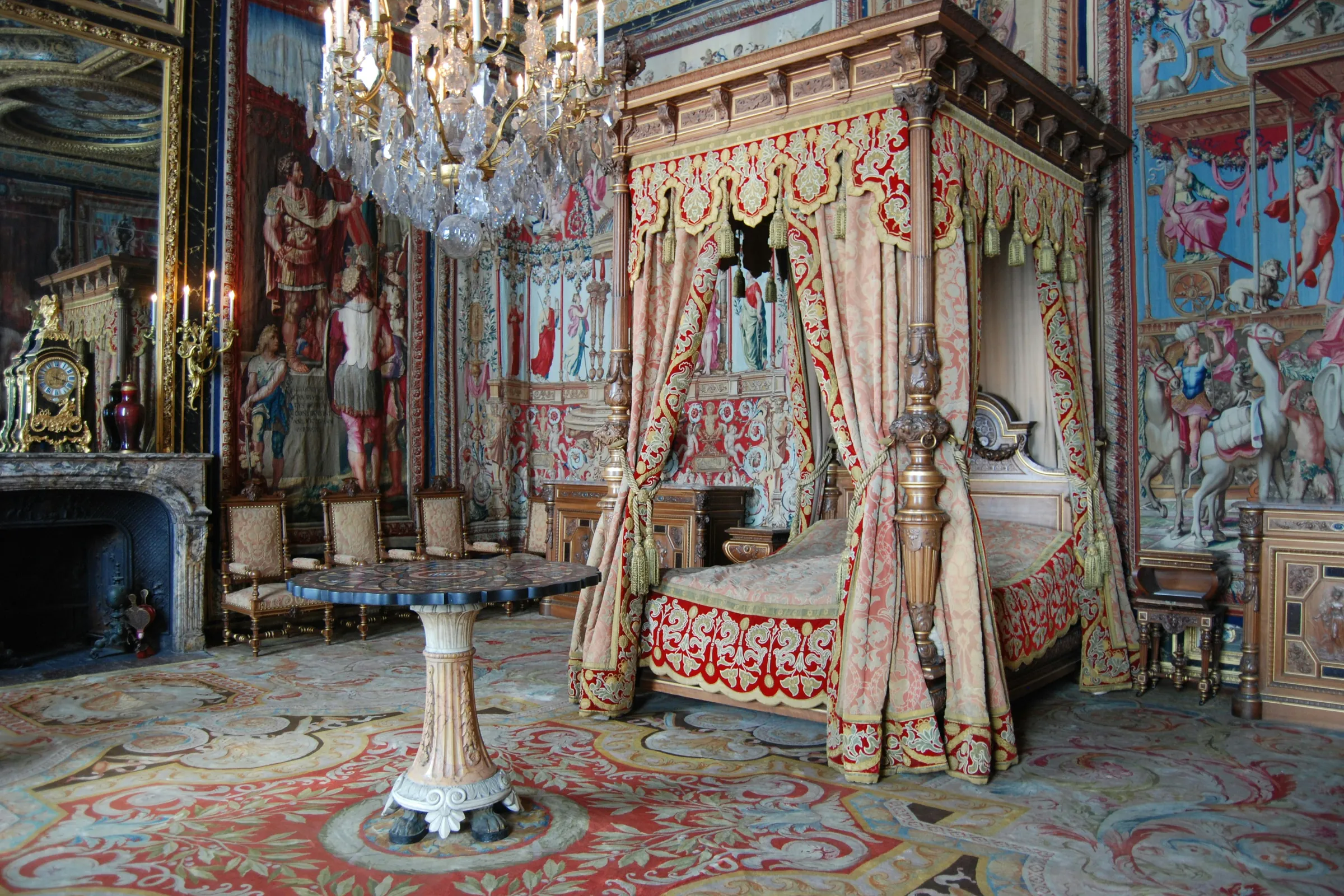
Inside, photography is permitted in the apartments without flash or tripod. The Gallery of Francis I rewards careful framing of the interplay between painted fresco and sculpted stucco; the throne room and the Napoleon apartments are rich in detail and gilding. Arriving early helps here too, giving you the rooms before the crowds and, in the gallery, softer raking light. Because the ticket is open-date, you can pick a day with clear light — which matters at Fontainebleau, where the exteriors and the gardens are as photogenic as the rooms.
Frequently asked
What is the best month to visit Fontainebleau?
May, June and September give the best balance of weather, daylight and manageable crowds, with the gardens at their freshest. July and August are warmest but busiest; winter is quietest and atmospheric, with shorter hours.
What time of day should I arrive to avoid crowds?
Arriving early, soon after the 09:30 opening, is calmest, before the mid-morning and lunchtime peak. Late afternoon can also be quiet, but mind the last-entry times — 16:15 in winter and 17:15 in summer. The open-date ticket lets you arrive whenever suits you.
Is Fontainebleau open on Tuesdays?
No. The palace is closed every Tuesday, and also on 1 January, 1 May and 25 December. This catches out many visitors, so plan your date around it. The gardens and park stay free and open even on Tuesdays.
What are the opening hours?
October to March, 09:30–17:00 with last entry at 16:15; April to September, 09:30–18:00 with last entry at 17:15. Closed Tuesdays, 1 January, 1 May and 25 December.
Which days are quietest?
Weekdays outside French school holidays, with an early arrival, are the quietest. Weekends and holiday weeks are busiest. Since the ticket is open-date, you can simply pick a calmer day and arrive early.
Are the gardens worth seeing?
Yes — and they're free. The Grand Parterre, the English garden, the Diana garden and the carp pond are open daily, even when the palace is closed, and offer a fine contrast to the decorated interiors. They're freshest from May to September.
How long should I plan for a visit?
Allow about 2 hours for the apartments, the Gallery of Francis I and the Napoleon museum, plus an hour or more for the gardens. With the surrounding forest, a full day is easy to fill.
Does the ticket let me pick when I arrive?
Yes. Fontainebleau uses open-date entry, so you choose your visit date and the ticket is valid all that day — there's no fixed time slot. We issue your e-ticket, and you walk in past the queue whenever you arrive during opening hours.